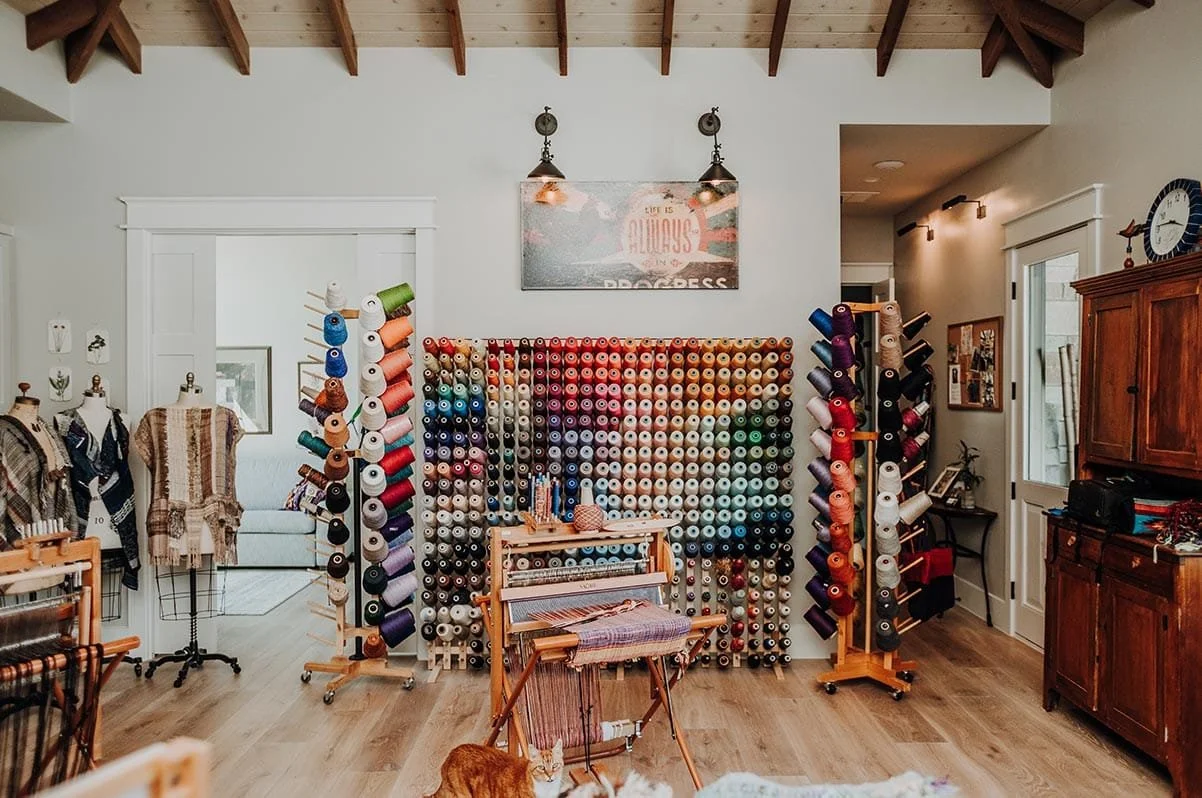
What Is SAORI?
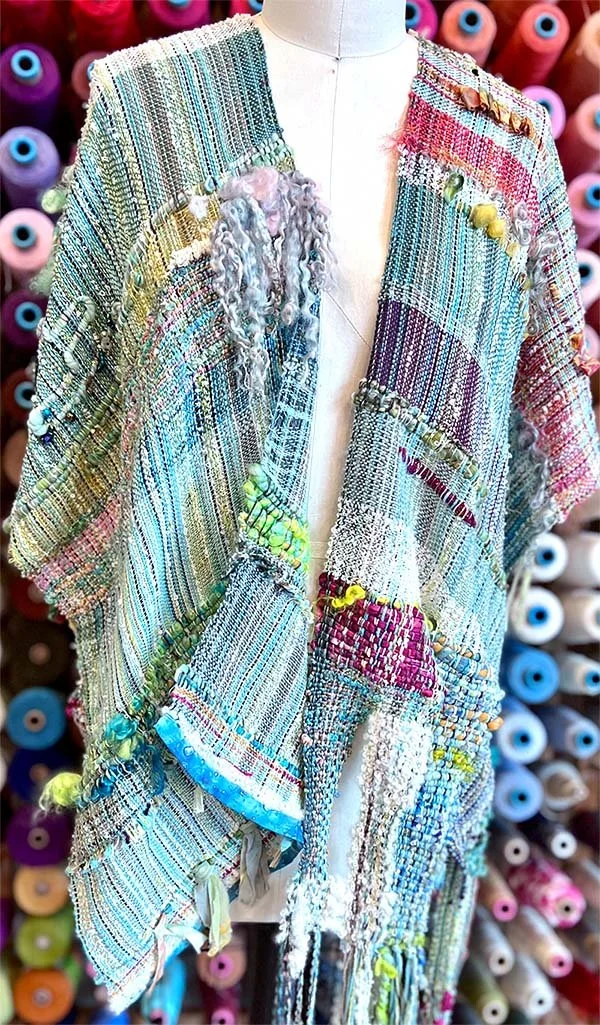
SAORI: FREE-FORM UNINHIBITED WEAVING
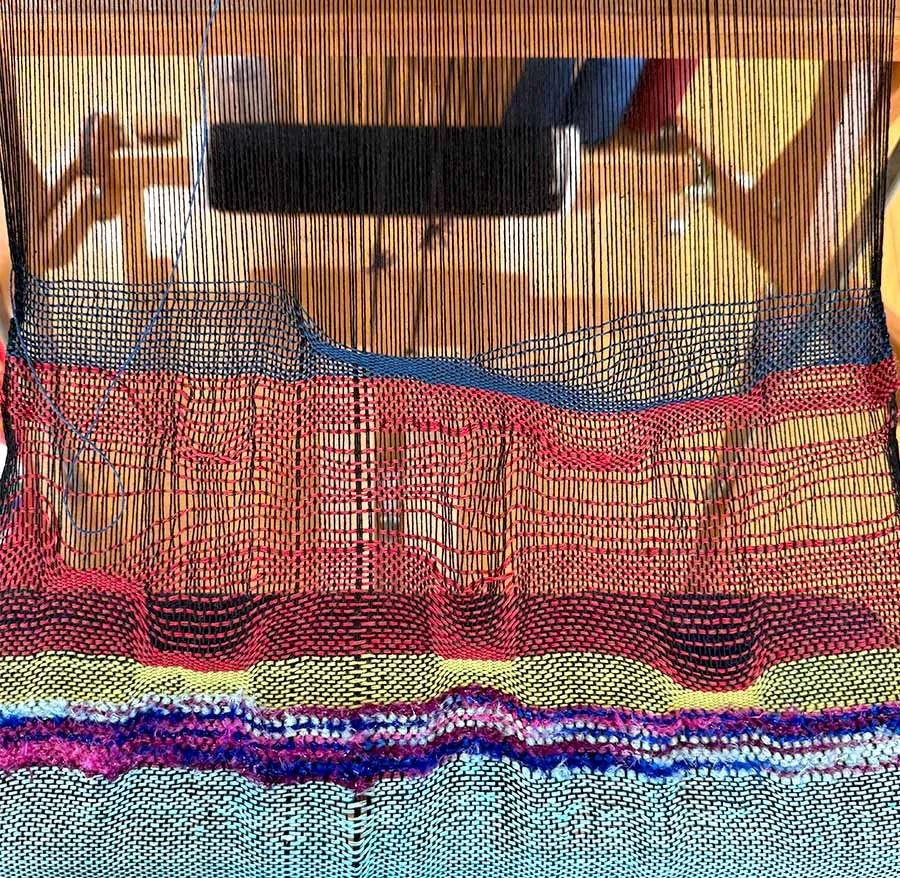
SAORI weaving, defined most simply, is a free-form, uninhibited practice of weaving. It’s a human expression of one’s creative "self" through the art of weaving. Misao Jo (1913 – 2018) was 57 when she decided she’d like to learn to weave. That is inspiring in itself! Don’t we often limit ourselves by thinking "it’s too late" or "I’m too busy" to start something new?
The word "SAORI" is Misao’s own creation, which combines part of her name with the Japanese word for weaving. It’s also a combination of the Zen word "sa" or "sai," — meaning everything has its own individuality and dignity — and “ori,” meaning weaving.
Misao’s philosophy is a "no conventional rules" approach to weaving. This frees SAORI weavers to create through fearless self-expression and experimentation, while rejecting mass-produced machine-made uniformity.
Misao Jo did not have any conventional credentials or desires for materialism. Instead, she held to her dream of global harmony, passion for inspiring humanity, and creativity, and a spirited commitment to challenging and expanding the status quo.
From SAORI: Self Innovation Through Free Weaving
MISAO JO AND SAORI WEAVING
When Misao Jo was 57 years old, she designed and asked her son to build a weaving loom so she could start weaving as a hobby. One day, as she wove an obi (a belt for Japanese kimono), she discovered a warp thread was missing. She thought it made a good effect, though, and she was very pleased to see that a nice pattern had been formed by accident.
She showed the obi to someone who ran a weaving factory, because she wanted to know how other people would value her weaving. The man told her that her obi was flawed, and it would be worthless as a commercial product, since one warp thread was missing.
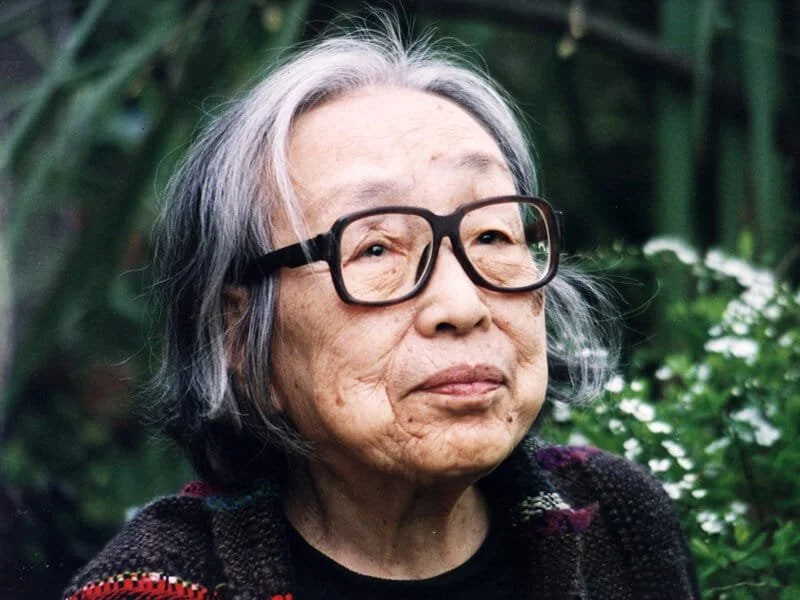
Photo credit: SAORI Global
I have a brain and emotion. I’m a human being. I will weave an obi that is full of humanity
— Misao Jo
Misao realized that commercial factories are only eager to produce "flawless" cloth, but as she said,
So she began to intentionally weave that way. Eventually, she took her work to the owner of a fashionable kimono shop. To her surprise and delight, he bought all the work she showed him, sold it quickly, and asked for more!
She gave many of her weavings to her friends, who naturally became interested and eager to learn how to weave for themselves. Through this teaching experience, she became convinced that everyone has the power of creativity, and if given the chance, anyone can tap into this hidden ability and demonstrate it in their work.
More information about Misao Jo can be found in the book: SAORI Self Innovation Through Free-Weaving (which is available for purchase in our studio!)
In the same book, Misao describes both her evolution as a weaver and the philosophy she developed that sets SAORI apart from conventional or traditional weaving.
In SAORI we break with conventional, patterned thinking which values uniformity and perfection, and strive instead to let the creative expression of our true selves shine and guide our work.
Misao felt that we should not aspire to create like machines, but rather celebrate our humanness in its perfect imperfection. She would say,
We do not make an imitation, but rather a creation. We do not weave a piece of cloth, but rather our true selves.
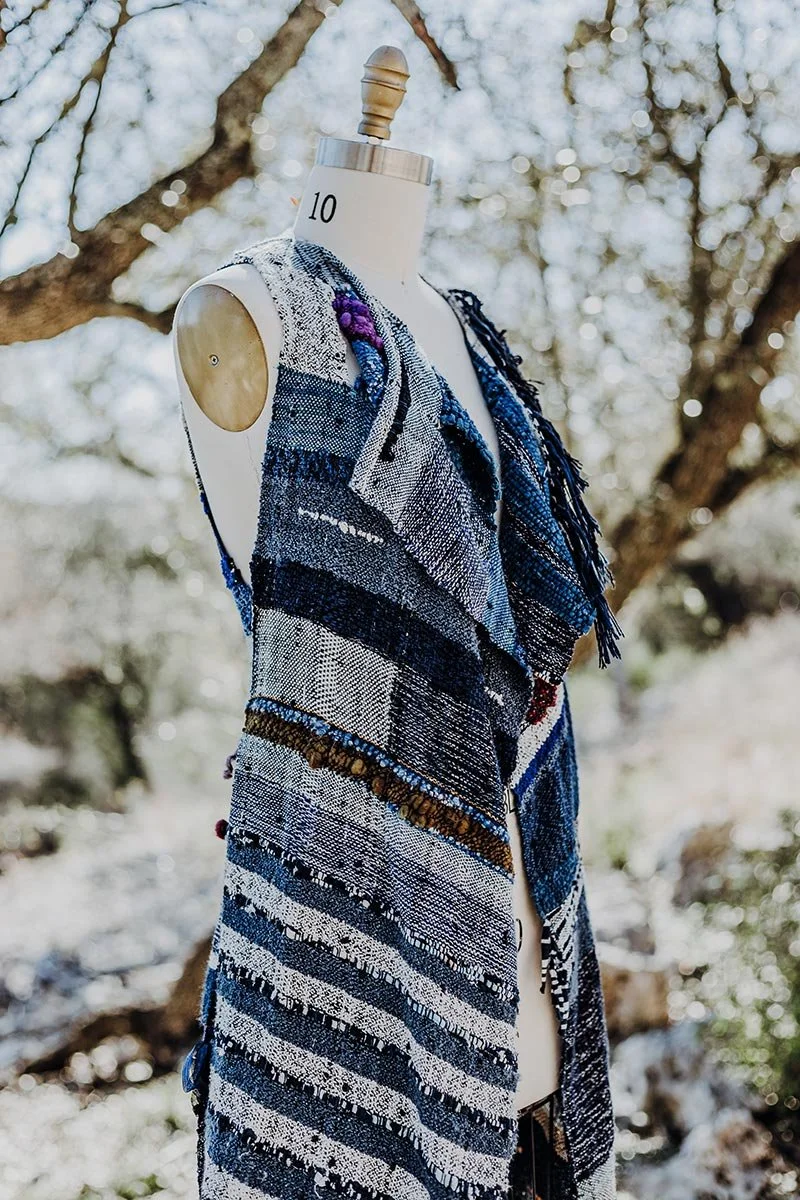
As SAORI weavers, we aspire to express this “free-spirited” weaving with color, texture, and irregularity in our woven cloth.
To learn more about SAORI and Misao Jo, please visit the official Saori website at saoriglobal.com.
LEARN MORE ABOUT SAORI
Interested in learning more about Saori? Read about the classes and presentations we offer, and sign up for a session or two!